shai
a tiny editorial magazine about where stories happen
The West Bank of the Nile
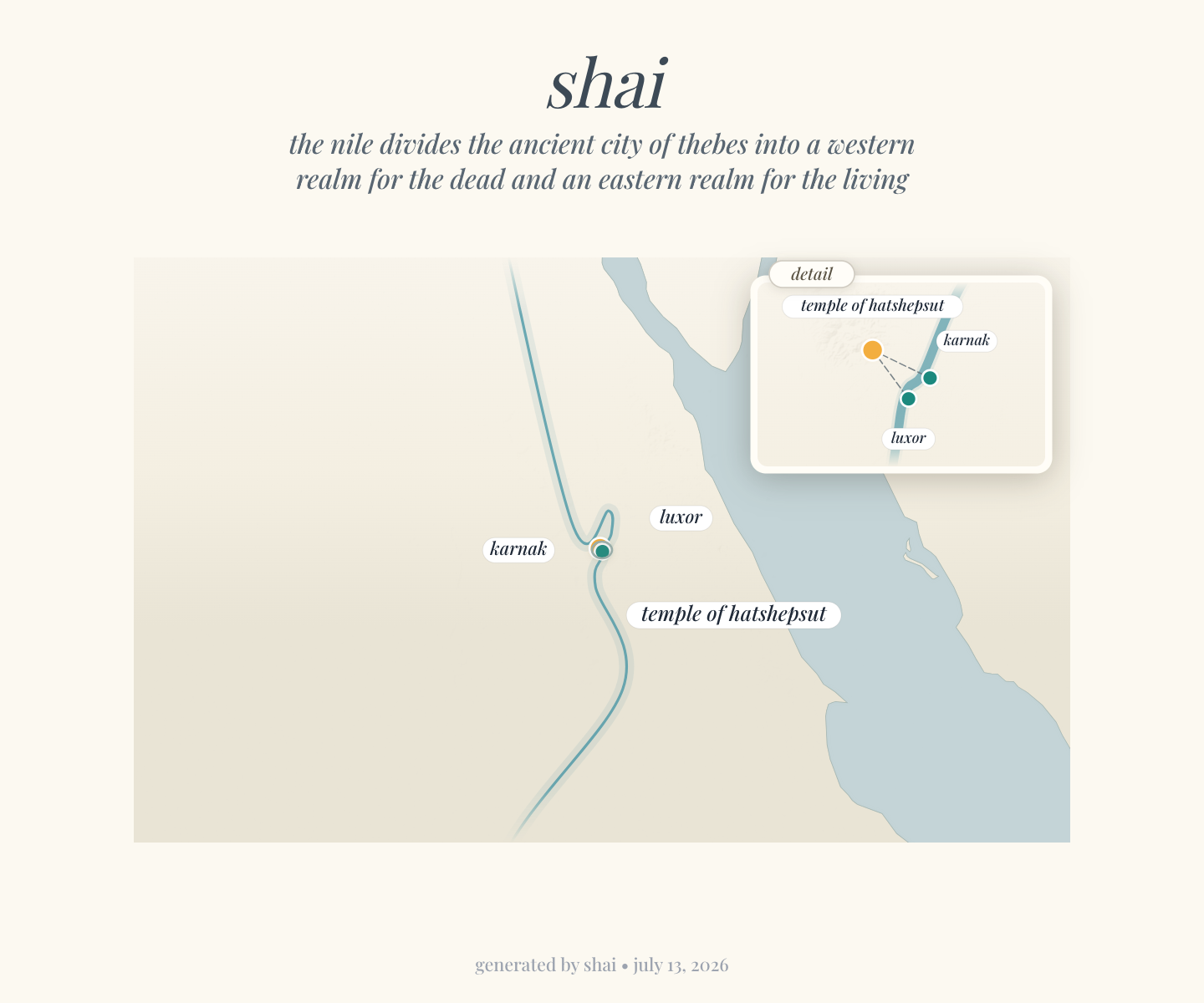
The Temple of Hatshepsut sits on the West Bank of the Nile, facing the monumental temple complexes of Karnak and Luxor on the opposite shore. The ancient Egyptians buried their dead on the west bank, where the sun sets, and lived on the east bank, where it rises.
That one sentence of geography carries the whole theology. To cross the river at Thebes was to move between kingdoms: the east bank belonged to the living — Karnak's pylons, Luxor's colonnade, the noise of a capital — and the west belonged to everyone who had finished with noise. The funeral was, literally, a ferry ride. When Hatshepsut set her mortuary temple into the cliffs at Deir el-Bahari, she wasn't choosing a quiet spot; she was taking her place in a procession that every Theban expected to join, on the bank where the sun goes to die and is expected back by morning.
You can read paragraphs about this and still not quite hold it — until you see the river drawn with a temple on each side. The map below is the story: one blue line, the dead to its left, the living to its right, and twenty degrees of the Nile valley to say where in the world you are standing. Every place named in the passage is on it, and nothing else is.
Places argue. A strait argues with two coastlines, a border town argues with two capitals, a west bank argues with an east one. Most writing about places carries these arguments in its sentences and then illustrates them with a stock photo. This magazine exists for the other option: draw the sentence.
— every place has taken a piece of my loving
shai · issue 01 · maps are generated from the text they accompany · issue 02 · issue 03 · home